What Is a Good IgG Percentage in Colostrum? The Truth About Quality Testing
You're shopping for colostrum, you see labels boasting IgG percentages, and you're wondering: what number actually means something? Is higher always better? Are these numbers even real?
The short answer: a good IgG percentage depends entirely on how it was measured. Some brands report inflated numbers using rough testing methods that damage proteins in the process. The real question isn't "how high is the IgG?"—it's "how accurate is that number?"
Let's untangle this, because understanding IgG quality is the difference between a supplement that actually works and one that's just impressive on paper.
What Makes a "Good" IgG Percentage (Plain Language First)
IgG is an antibody—think of it as a trained immune messenger that your body recognizes and uses immediately. Most colostrum products report IgG content somewhere between 20% and 40% by weight. But here's where it gets tricky: that number is only as good as the test used to measure it.
A genuinely good IgG percentage is one where the protein hasn't been damaged during processing or testing. Some brands use harsh methods that break down proteins, then measure the fragments and count them as intact IgG. It's like counting broken eggs as whole eggs—technically there's more "egg content," but you've lost something crucial.
The honest answer: aim for brands that use turbidity-corrected testing, which accounts for damaged proteins and reports only the bioactive IgG that your body can actually use. A lower accurate number beats a higher inflated number every single time.
How IgG Testing Works (And Why Method Matters More Than Numbers)
Colostrum IgG content is typically measured using one of two approaches: standard protein analysis or turbidity-corrected analysis. Here's the difference.
Standard testing measures total nitrogen and protein content, then estimates IgG based on that. It's fast and cheap, but it doesn't distinguish between intact proteins and fragments. When colostrum is processed aggressively—high heat, aggressive drying, rough handling—proteins break down. Standard testing still counts those fragments as "IgG," inflating the number.
Turbidity-corrected testing is more rigorous. It measures actual protein particles and their optical properties, filtering out damaged or fragmented proteins. The result is a lower number than standard testing would show, but it's a number you can actually rely on. Research suggests that bioavailable IgG—the kind your immune system can use—correlates much more closely with turbidity-corrected results.
So when a brand reports a "lower" IgG percentage using accurate methods, they're actually giving you more useful information. It's confident science, not marketing hype.
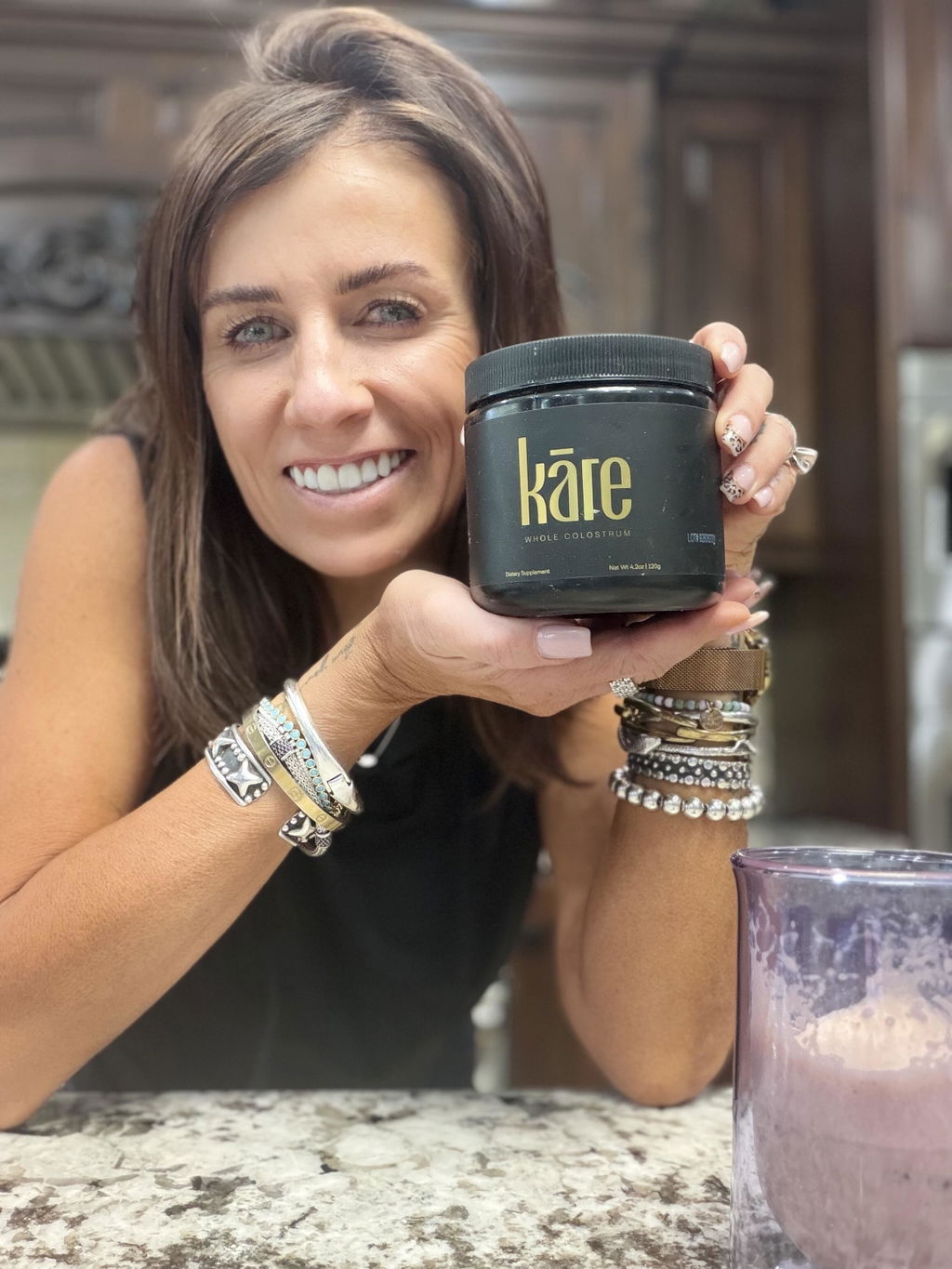
kāre's Approach: Accuracy Over Inflated Numbers
We source colostrum from grass-fed, pasture-raised cows on New Zealand's South Island, below the Southern Alps. These cows roam freely outdoors 365 days a year on 95%+ fresh grass diet—no routine vaccinations, no artificial stress, no rBST (a synthetic hormone some farms use). That foundation matters because healthier cows produce colostrum naturally rich in immune factors.
But sourcing is only half the story. We process fresh colostrum within 48 hours of collection using gentle low-temperature spray-drying (37–60°C). This preserves the bioactive proteins instead of damaging them. Then—and this is the part we're genuinely proud of—we use turbidity-corrected testing to measure IgG. Our reported IgG number is lower than some brands, because it's real.
We also practice radical transparency about our ethical standards. Calves receive their first 4 litres of colostrum before we collect any, ensuring newborns get their critical immune start. That's not a marketing line; it's how we operate.
When you're evaluating colostrum, ask about testing method. If a brand won't explain how they measure IgG, that's a signal. If they've used gentle processing methods and transparent testing, they'll tell you—even if the number looks modest compared to competitors. Learn more about what IgG actually does in your body, or explore how colostrum supports gut health.
The right supplement is the one you can trust. We've built kāre on that principle—sourcing with integrity, processing with care, and testing with honesty. Try kāre and feel the difference real colostrum makes.