Turbidity Testing for Colostrum IgG: Why Accuracy Matters More Than Big Numbers
You're shopping for a colostrum supplement and notice something odd: brands are claiming wildly different IgG levels. One says 40g per serving, another 25g, another 18g. Who's telling the truth? The answer often comes down to how they're testing—and whether they're using turbidity correction. If you've stumbled on this keyword, you're asking the right question. Let's cut through the noise.
What Turbidity Testing Actually Does (In Plain Terms)
IgG (immunoglobulin G) is the workhorse antibody in colostrum—the immune-boosting protein that does the real work. But here's the catch: when you measure protein in colostrum, you're not just measuring IgG. You're measuring everything cloudy in the sample.
Imagine trying to count yellow cars in a foggy parking lot. Standard protein tests measure the fog itself, not just the cars. That fog includes fats, minerals, and other proteins that aren't IgG at all. Turbidity correction is like clearing the fog. It accounts for all that cloudiness so you can see exactly how much actual IgG is present.
In technical terms, turbidity testing uses optical density measurements to distinguish between IgG antibodies and other suspended particles in the colostrum matrix. Without this correction, a brand can report inflated IgG numbers that look impressive on a label but don't reflect what's actually bioavailable—what your body can actually use.
The Science: Why Processing Method Changes Everything
Here's where processing gets real. Some colostrum brands use harsh drying methods—high heat, aggressive filtering, or rough handling. These methods damage the delicate protein structures, breaking IgG molecules into smaller fragments. When that happens, standard testing picks up all these fragments as "protein," but your immune system can't use them the same way.
Research suggests that bioactive IgG—intact, functional molecules—is what triggers immune response and supports gut health. A study measuring colostrum quality found that gentle processing methods preserve significantly more intact IgG compared to industrial drying techniques. Turbidity-corrected testing catches this difference because it measures protein density more precisely, accounting for the size and integrity of the molecules being measured.
Translation: a brand reporting 18g of turbidity-corrected IgG is likely delivering more functional immune support than a competitor claiming 35g without correction. Lower number, higher value.
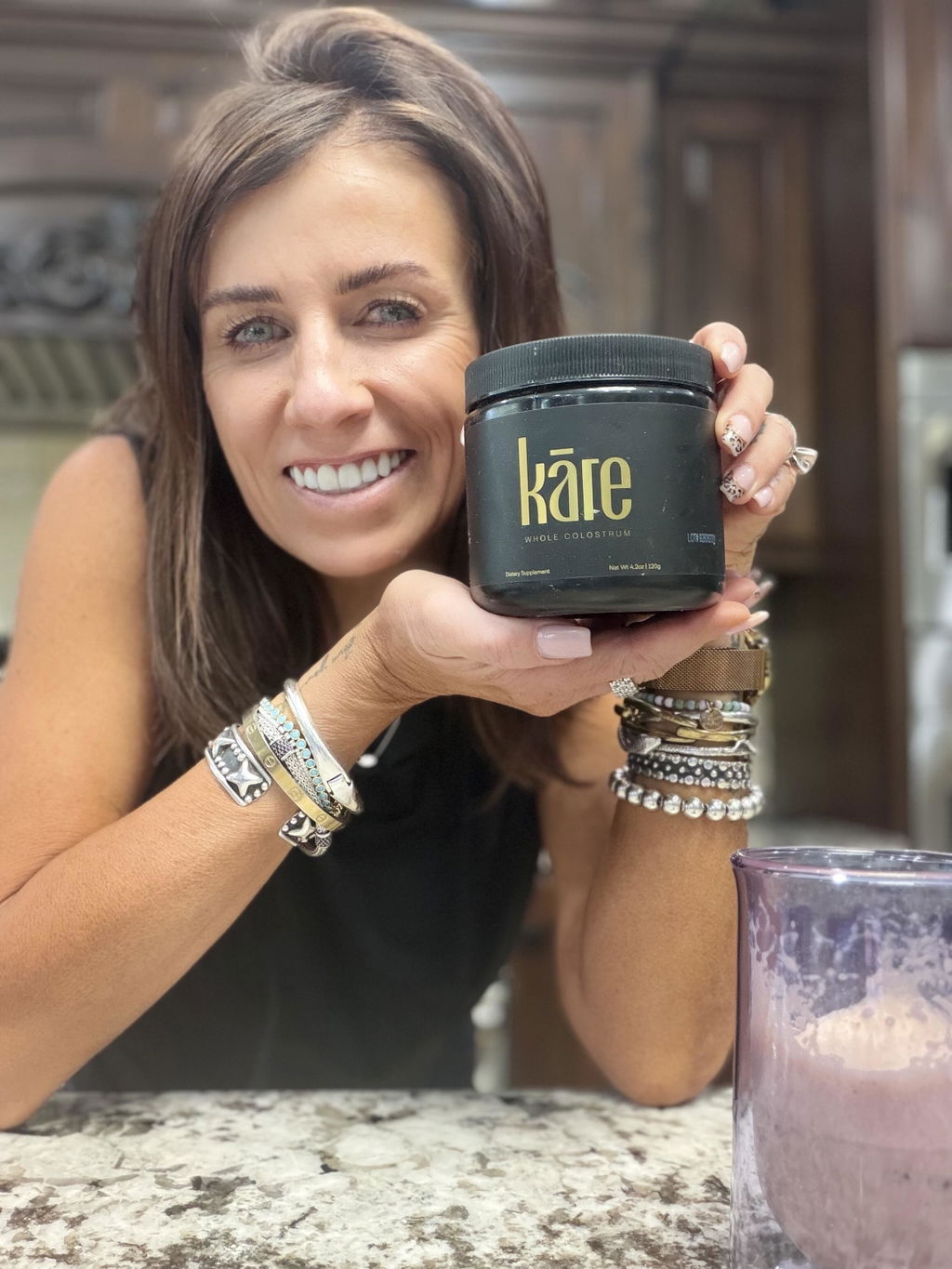
How kāre Uses Turbidity Testing to Stay Honest
We process our colostrum fresh—within 48 hours of collection from our grass-fed cows on New Zealand's South Island—using gentle low-temperature spray-drying (37–60°C). This preserves the integrity of the IgG molecules. Then we test using turbidity-corrected methods so you know exactly what you're getting.
Our cows graze freely 365 days a year on fresh pasture below the Southern Alps. They're never routinely vaccinated or artificially stressed (both of which inflate IgG artificially). That means our colostrum reflects genuine immune health, not manufacturing shortcuts.
We also honour ethics: calves receive their first four litres before we collect anything. No shortcuts, no compromises.
When you see our IgG number on the label, it's not inflated by harsh processing damage or testing sleight-of-hand. It's real. It's bioactive. It's backed by transparent, corrected testing that some brands avoid because their numbers wouldn't look as impressive.
If you want to understand more about how IgG works in your body, read our breakdown of IgG and immune function. Or if you're curious about supporting gut health specifically, explore how colostrum influences your microbiome.
Quality doesn't shout. It stands up to scrutiny. Turbidity-corrected testing is how we prove ours. Try kāre and feel the difference transparent quality makes.