Colostrum vs Collagen for Skin: Which One Actually Works Better?
You've scrolled past a hundred skin supplement ads. Collagen builds skin. Colostrum boosts immunity. They sound like different jobs, right? But here's what most people don't know: the skin-building conversation is way more interesting than that. If you're choosing between colostrum and collagen for skin health, you're actually looking at two entirely different mechanisms—and one might be working harder than you think.
The Plain Language Answer: Colostrum and Collagen Do Different Things (But Both Help Skin)
Let's start simple. Collagen is a protein—literally the structural stuff that keeps skin firm and bouncy. When you ingest collagen powder, your body breaks it down into amino acids and reassembles some of it into new collagen fibers. It's direct, it makes intuitive sense, and it works.
Colostrum is something else entirely. It's the first milk produced by mammals after birth, packed with immune factors, growth factors, and bioactive compounds. When you take colostrum for skin, you're not getting collagen directly. Instead, you're giving your body tools to build and repair collagen itself—plus supporting the gut and immune system that influence how well your skin actually functions.
Think of collagen as the brick. Colostrum is the mason's apprentice, the toolbelt, and the foreman's experience all rolled into one.
How They Actually Work: The Biological Layer
Collagen supplementation works through amino acid delivery. Your digestive system breaks collagen peptides (the type in most powders) into dipeptides and tripeptides—tiny amino acid clusters. Your intestines absorb these more efficiently than longer protein chains. These amino acids circulate and become available for collagen synthesis, especially if you're also getting adequate vitamin C and other cofactors.
Colostrum's skin benefits operate through a different pathway entirely. Research suggests colostrum contains immunoglobulins like IgG, which may support gut barrier function. A healthier gut barrier means better nutrient absorption—which indirectly supports skin health. But colostrum also contains growth factors (like IGF-1) that research suggests may stimulate fibroblast activity—the cells that literally manufacture collagen. Additionally, colostrum may support gut microbiome balance, and emerging research indicates that microbiome diversity influences skin condition through the gut-skin axis.
The honest comparison: collagen gives you direct building blocks. Colostrum optimizes the conditions for your body to build and maintain skin on its own.
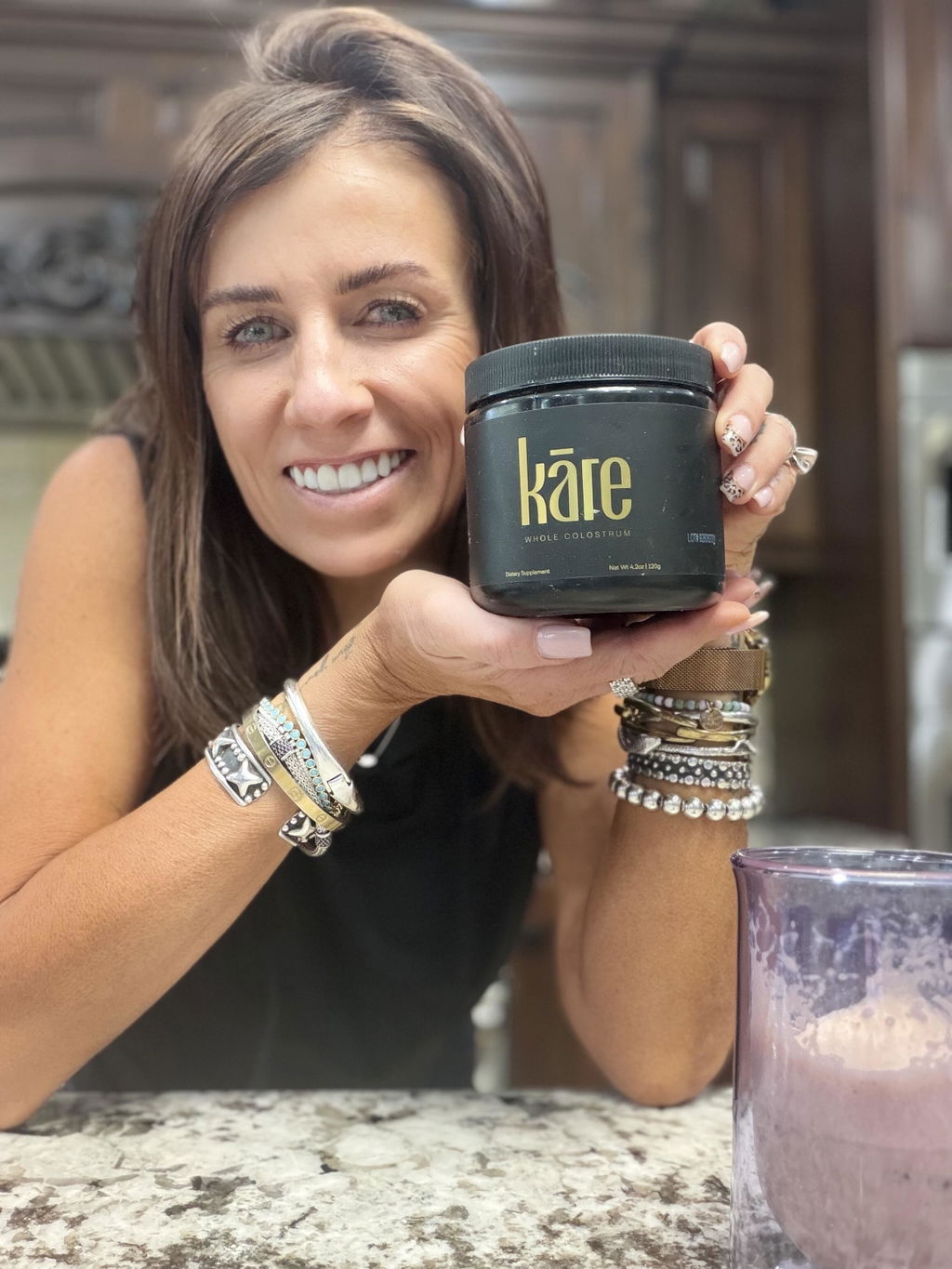
Why kāre Colostrum Changes the Conversation
Most colostrum products claim high IgG numbers—but here's the industry secret: harsh processing damages these delicate proteins, so brands artificially inflate their IgG counts through non-corrected testing. The number looks impressive on the label. The actual bioactive IgG in the powder? Often much lower.
kāre uses turbidity-corrected testing. That means our reported IgG is the real, bioactive amount—not inflated by measurement error. We're transparent about this because a lower accurate number beats a higher fake one every time.
There's another difference: our source. kāre sources from grass-fed, pasture-raised cows on New Zealand's South Island, below the Southern Alps. These cows roam freely outdoors 365 days a year on 95%+ fresh grass diet—no routine vaccinations, no artificial stress. We process the colostrum fresh within 48 hours using gentle low-temperature spray-drying (37-60°C) that preserves the bioactive compounds your skin actually needs.
The result: colostrum that works because it's actually bioactive, not because of marketing.
The Bottom Line
Collagen and colostrum both support skin health. Collagen is faster and more straightforward—your body knows exactly what to do with those amino acids. Colostrum is deeper and more holistic—it supports the entire system that keeps skin healthy from the inside out. Some people choose both. Many find that when they prioritize colostrum for skin elasticity alongside good nutrition and sleep, they get better results than collagen alone.
The choice depends on whether you want to hand your skin the building blocks, or give your whole body the tools to build better skin itself.
Try kāre colostrum and experience the difference that real bioactivity makes.