Colostrum vs Creatine: A New Approach to Athletic Performance and Recovery
You've heard the creatine pitch a thousand times. But if you're searching "colostrum new creatine supplement," you're probably wondering if there's something better—or at least different—for your training goals. The truth is, they work through completely different mechanisms. Colostrum isn't here to replace creatine; it's here to support the whole system your body uses to train harder, recover faster, and perform longer. And it does it naturally, without the loading protocols or water retention some athletes want to avoid.
Colostrum and Athletic Performance: The Natural Alternative to Synthetic Supplements
Let's start with what colostrum actually does. Bovine colostrum—the nutrient-dense first milk produced by cows after giving birth—contains a concentrated blend of growth factors, antibodies, and bioactive compounds that your body recognizes and uses immediately. Think of it as your body's own performance toolkit, just sourced from cows that have the same biology as you.
Creatine works by increasing phosphocreatine stores in muscle cells, which helps produce ATP (the energy currency your muscles use during high-intensity exercise). It's well-researched, effective, and popular for good reason. But colostrum operates upstream: it supports muscle protein synthesis, reduces exercise-induced inflammation, bolsters gut integrity (which directly affects nutrient absorption), and strengthens immune function—something heavy training compromises. Research suggests that athletes using colostrum may experience improved recovery times, reduced muscle soreness, and better endurance performance, particularly during sustained training blocks.
The key difference? Creatine is a specific compound that directly fuels muscle contraction. Colostrum is a whole-food concentrate that prepares your body to train harder and recover smarter. Many athletes actually use both.
How Colostrum Supports Recovery at the Cellular Level
When you train hard, you're creating micro-damage to muscle fibres and triggering an inflammatory cascade. This is normal—it's how adaptation happens. But prolonged or excessive inflammation delays recovery and can compromise your immune system, leaving you vulnerable to illness during peak training phases.
Colostrum contains high levels of IgG (immunoglobulin G)—the primary antibody in your immune system. IgG helps modulate inflammation, support gut barrier function, and protect against pathogens that might derail your training schedule. It also contains growth factors like IGF-1 and TGF-β, which research suggests may enhance muscle protein synthesis and reduce exercise-induced muscle damage.
But here's what matters: not all colostrum IgG numbers are honest. Some brands use harsh processing methods that damage proteins, then report inflated IgG counts that don't reflect what your body can actually use. When you're evaluating colostrum, look for transparency about testing methods—specifically, whether the brand uses turbidity-corrected IgG testing. That tells you the number is real and bioactive.
Why kāre Colostrum Stands Apart for Athletes
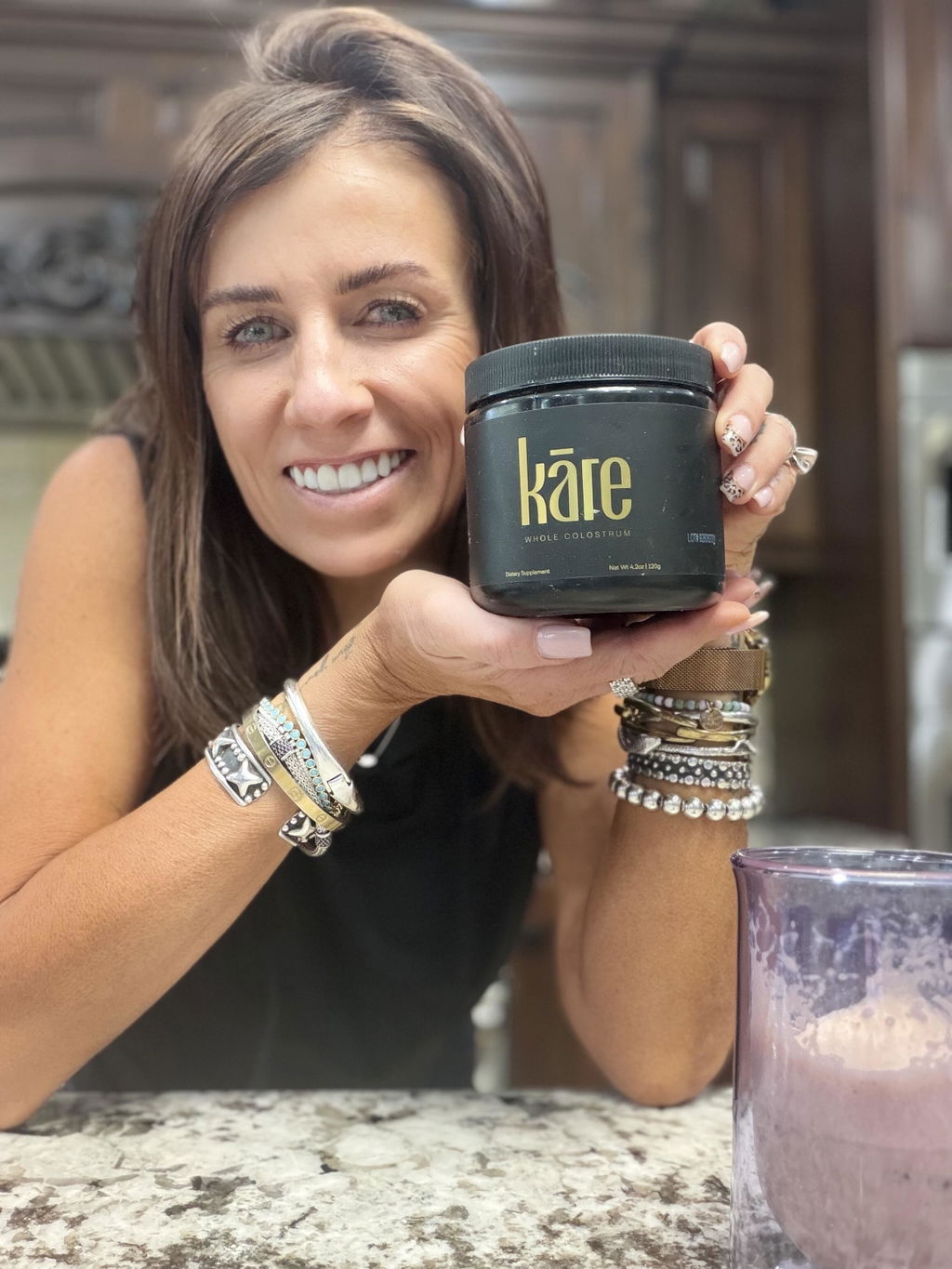
kāre sources its colostrum from grass-fed, pasture-raised cows on New Zealand's South Island, below the Southern Alps. These cows roam freely outdoors 365 days a year on a diet that's 95%+ fresh grass. Fresh grass means higher micronutrient density, better omega-3 to omega-6 ratios, and more bioactive compounds than grain-fed or confined animals can produce.
More importantly, kāre processes colostrum fresh—never frozen—within 48 hours of collection, using gentle low-temperature spray-drying (37-60°C) that preserves bioactive proteins. This is the opposite of harsh processing. And kāre uses turbidity-corrected IgG testing, so when we report a number, it's what your body can actually use. We're also rBST-free, non-GMO, and certified FSSC 22000 and ISO 17025.
If you're serious about athletic performance, colostrum complements your entire training philosophy: it supports the recovery system, strengthens immunity during heavy training, and enhances the adaptation that makes you faster and stronger. Learn more about how colostrum supports athletic performance, or dive deeper into what IgG actually does in your body.
You don't need to choose between colostrum and creatine—they work beautifully together. But if you're looking for a natural, whole-food approach to recovery that addresses immunity, gut health, and inflammation at once, colostrum is the tool most athletes are missing. Try kāre colostrum and feel the difference quality makes.