Colostrum Mixed with Collagen: A Synergistic Approach to Gut and Skin Health
You've probably noticed colostrum and collagen popping up together in wellness circles, and for good reason. If you're considering mixing these two supplements, you're asking exactly the right question: do they work better together, and what's actually happening inside your body when you combine them?
The short answer is yes—there's solid logic behind pairing them. But let's break down why, what the research actually says, and how to do it properly.
The Plain Language Case for Colostrum and Collagen Together
Think of colostrum and collagen as working on different parts of the same system. Colostrum is a nutrient-dense liquid produced by cows immediately after birth. It's packed with immune factors, growth factors, and proteins that support your gut lining and overall immunity. Collagen, on the other hand, is the structural protein that forms the scaffolding of your gut wall, skin, joints, and connective tissue.
When you combine them, you're essentially saying: "Here's the biological signalling to heal and strengthen the gut barrier, and here's the raw material to rebuild it." It's complementary, not redundant.
Colostrum contains immunoglobulins (antibodies that defend against unwanted pathogens), lactoferrin (an iron-binding protein), and growth factors like IGF-1 (insulin-like growth factor 1, which promotes cell growth and repair). Collagen provides amino acids—especially glycine and proline—that your body uses to physically reconstruct damaged tissue.
Many people report feeling better gut comfort and noticing improvements in skin elasticity faster when using both, rather than either alone. That's not magic; it's complementary biology.
The Research and Mechanism Behind the Combination
The gut barrier is a single layer of cells (epithelial cells) held together by tight junction proteins. When this barrier is compromised—something researchers call "leaky gut" or increased intestinal permeability—you can experience bloating, sensitivity to foods, and systemic inflammation.
Colostrum's bioactive compounds, particularly immunoglobulins, help regulate immune responses at the gut level. They work to support the gut's ability to distinguish between friendly bacteria and potential threats. Meanwhile, the growth factors in colostrum, especially IGF-1, stimulate cell proliferation—literally encouraging your gut cells to multiply and strengthen the barrier.
Collagen fills a different niche. Your gut lining contains collagen as part of the lamina propria (a tissue layer beneath the epithelial cells). When you consume collagen, your body breaks it down into amino acids and collagen peptides. These peptides have been shown in research to support intestinal barrier integrity and reduce inflammatory markers in the gut.
A 2019 review in Nutrients highlighted that collagen peptides may help restore the gut barrier by promoting the synthesis of tight junction proteins. Combined with colostrum's immune and growth-factor support, you're hitting the problem from multiple angles: immune regulation, growth signalling, and structural repair.
For skin elasticity, the mechanism is similar. Both colostrum and collagen support collagen production in the dermis (the living layer of skin beneath the surface). Colostrum's growth factors encourage fibroblasts (collagen-producing cells) to work harder; collagen provides the amino acids those cells need.
Why kāre's Approach Makes This Combination Smarter
Not all colostrum is created equal, and this matters when you're stacking it with another supplement.
Our New Zealand bovine colostrum is sourced from grass-fed, pasture-raised cows on the South Island. These cows roam freely outdoors 365 days a year, eating a 95%+ fresh grass diet. That matters because nutrient density follows the cow—better soil health and year-round pasture grazing means richer, more bioactive colostrum.
More importantly for this combination: we process our colostrum fresh within 48 hours of collection, using gentle low-temperature spray-drying (37-60°C). This preserves the delicate immune factors and growth factors that make colostrum worth combining with collagen in the first place. Some brands use harsh high-temperature processing that damages these proteins, rendering them less effective.
We're also transparent about IgG testing. We use turbidity-corrected analysis, which means the IgG number we report is actually bioactive. Some brands report inflated IgG numbers from harsh processing that damages the proteins themselves—a higher number that doesn't translate to real immune support. We'd rather tell you an accurate, lower number than pretend.
When you're combining supplements for a specific outcome—gut healing, immune support, or skin health—you want bioactive ingredients, not marketing numbers.
How to Take Them Together
Mix both in warm (not boiling) water or add to a smoothie. Take colostrum on an empty stomach or with food—it's flexible. Many people find taking both first thing in the morning, or before bed, works well. Start with standard doses and observe how you feel over 2–4 weeks.
If you're managing gut microbiome health, consistency matters more than perfection.
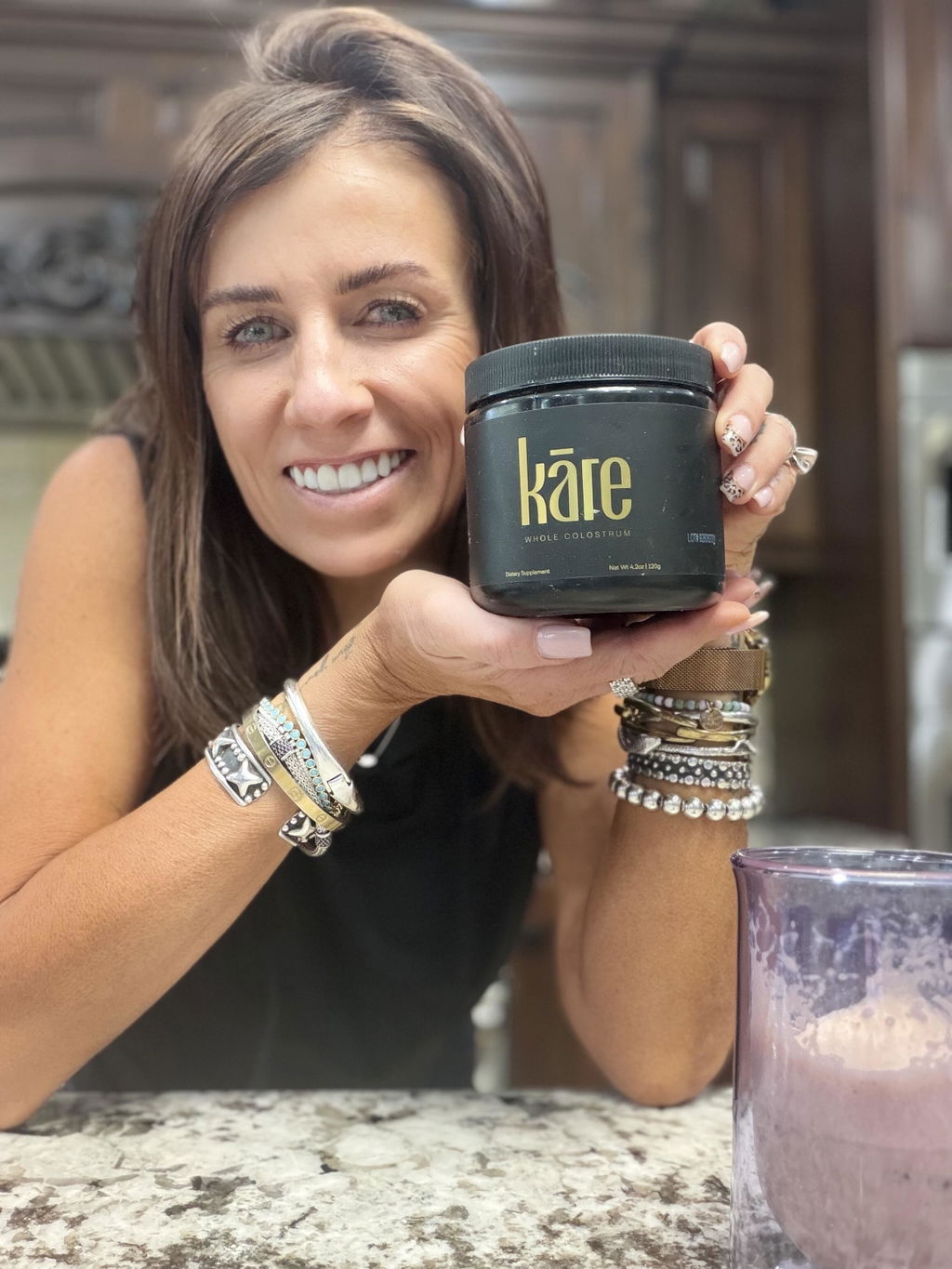
Ready to try a bioactive colostrum that's worthy of pairing with collagen? Try kāre and feel the difference transparency and ethical farming make.