Colostrum for Triathlon Training: Natural Support for Endurance Performance and Recovery
You've crushed the swim. You're halfway through the bike. Your legs are screaming on the run. By the time you cross the finish line, your immune system is equally wrecked—and that's when the real trouble starts. Post-race infections, lingering fatigue, and a gut that won't cooperate are the unglamorous side of triathlon training that nobody talks about enough.
Here's where colostrum enters the conversation. This nutrient-dense first milk from grass-fed cows contains concentrated immune factors, growth factors, and amino acids that may support exactly what endurance athletes need most: faster recovery, stronger immunity under stress, and a gut that actually works when you need it to.
What Colostrum Does for Triathlon Athletes (Plain Language First)
Think of colostrum as a biological recovery shortcut. When you train hard—especially across three disciplines—you create what's called "open window syndrome." Your immune system temporarily dips after intense exercise, leaving you vulnerable to colds and infections for 72 hours or so. Your gut lining, stressed by hours of running and the fluid intake that comes with it, becomes more permeable (sometimes called "leaky gut"). Your muscles need amino acids to repair. Your energy systems are depleted.
Colostrum addresses all of these at once. It's packed with IgG, an immune antibody that helps seal and protect your intestinal lining. It contains growth factors (like IGF-1, insulin-like growth factor) that research suggests may support muscle repair and adaptation. It's rich in amino acids, particularly branched-chain amino acids (BCAAs)—the building blocks your muscles crave post-workout.
The result isn't magic. It's biology doing its job better.
The Science: How Colostrum Supports Endurance Training Adaptations
Several studies have looked at colostrum supplementation in athletes. Research published in the Journal of Sports Science & Medicine found that athletes taking bovine colostrum showed improved intestinal barrier function and reduced infection rates during heavy training blocks. Another study in Sports Medicine suggested colostrum may enhance the body's ability to adapt to endurance training by supporting recovery markers.
The mechanism is straightforward: colostrum's immunoglobulins (antibodies) coat the gut lining and reinforce the tight junctions—think of them as the seals on a door. When training volume is high, stomach acid, impact stress, and dehydration damage these seals. IgG helps repair them. Meanwhile, growth factors like lactoferrin and IGF-1 stimulate cell regeneration, which is exactly what happens during the adaptation phase after hard training.
For triathletes specifically, the gut-immunity connection is critical. Your gut isn't just digesting food; it houses 70% of your immune system. When your intestinal barrier is compromised, bacteria can cross into the bloodstream, triggering inflammation and infection risk. Colostrum helps keep that barrier intact, so your immune system stays focused on recovery instead of fighting invaders.
Learn more about how colostrum supports athletic performance across different training modalities.
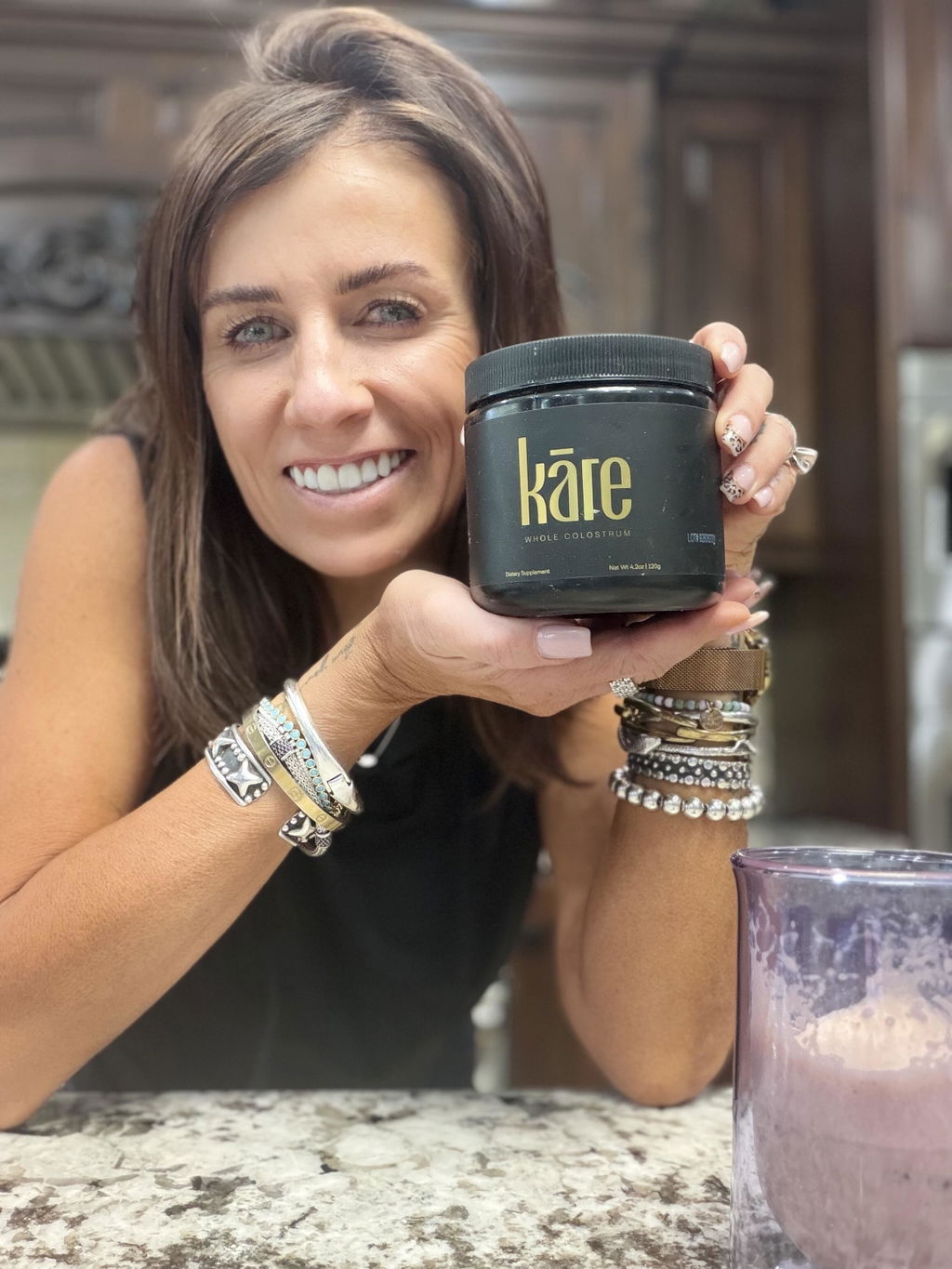
Why kāre Colostrum Is Built Different for Serious Athletes
Not all colostrum is created equal. Some brands report eye-popping IgG numbers that don't hold up under honest testing. Here's why: harsh processing—high heat, aggressive extraction—damages proteins and inflates the numbers through turbidity (cloudiness) rather than actual bioactive content. kāre doesn't do that.
Our colostrum comes from grass-fed, pasture-raised cows on New Zealand's South Island, below the Southern Alps. These cows roam freely outdoors 365 days a year, eating 95%+ fresh grass. That lifestyle produces colostrum with naturally higher nutrient density than confined cows. We process it fresh—never frozen—within 48 hours of collection using gentle, low-temperature spray-drying (37-60°C). That preserves the bioactive proteins instead of destroying them.
Most importantly: we use turbidity-corrected IgG testing. Our reported numbers are actually bioactive, not inflated. A lower honest number beats a higher false one, especially when you're relying on this stuff to keep you healthy through peak training season.
We also make sure every batch is certified FSSC 22000 and ISO 17025, and we're rBST-free and non-GMO. Your colostrum shouldn't come with asterisks or questions.
The Bottom Line for Triathletes
Colostrum won't make you faster on race day. But it may help you stay healthy during the months of hard training that lead up to it. It may help your gut stay stable during long training sessions. It may support your immune system when it needs it most. For an athlete who's measured every other input, that's worth knowing about.
Try kāre colostrum and see if it makes a difference in how you feel during your next training block.