Colostrum for Autoimmune Gut Support: Science-Backed Benefits and Why Source Matters
If you're navigating autoimmune challenges, you've probably heard that gut health is ground zero. Your intestinal barrier—the lining that controls what gets absorbed into your bloodstream—is where a significant portion of your immune system actually lives. When that barrier is compromised (what researchers call "leaky gut"), things slip through that shouldn't, and your immune system can go into overdrive. Colostrum, the nutrient-dense first milk from mammals, has emerged as a genuinely promising natural support for this delicate system. But not all colostrum is created equal, and the sourcing, processing, and transparency around its bioactive compounds matter far more than most people realise.
What Colostrum Does for Autoimmune Gut Health (Plain Language First)
Colostrum is packed with antibodies and healing compounds that your gut lining needs. Think of your intestinal barrier like a selective bouncer at a club—it's supposed to let the good stuff (nutrients, beneficial bacteria) through and block the troublemakers (pathogens, undigested food particles). When you have autoimmune conditions, that bouncer is often either asleep or overzealous. Colostrum helps restore order in two main ways: it strengthens the physical barrier so fewer unwanted things get through, and it delivers immune-training compounds that help your body recognise friend from foe. Research suggests that bovine colostrum may support gut integrity and help reduce inflammatory responses in the intestinal tract—precisely what someone with autoimmune-driven gut issues needs.
The star player here is IgG (immunoglobulin G), the primary antibody in colostrum. IgG doesn't just fight infections; it also recognises and neutralises inflammatory triggers in the gut, helping to calm the immune response without suppressing it entirely. This nuanced support—calming inflammation without shutting down your immune system—is what makes colostrum different from blunt-force anti-inflammatory approaches.
The Mechanism: How Colostrum Works at a Cellular Level
Your gut barrier is held together by tight junctions—literally molecular locks between intestinal cells. When these loosen (due to stress, poor diet, infections, or autoimmune activation), the barrier becomes permeable, and partially digested food and bacterial fragments can trigger immune reactions throughout your body. This is where IgG steps in. These antibodies coat the gut lining, binding to potential triggers before they can cause problems. They also feed beneficial bacteria and help maintain the microbial community that keeps your barrier healthy.
Additionally, colostrum contains lactoferrin, lysozyme, and growth factors like IGF-1 (insulin-like growth factor 1)—compounds shown in research to support tissue repair and reduce intestinal inflammation. The growth factors may stimulate the growth of new intestinal cells, effectively rebuilding a damaged barrier from the inside out. This is why timing matters: colostrum works best when taken consistently, allowing these healing compounds to accumulate and do their work.
A key insight: the IgG has to actually be bioactive (still functional) when it reaches your gut. Some brands use harsh processing that damages these delicate proteins, then report inflated IgG numbers that look impressive on paper but don't work in your body. That's where testing transparency becomes critical.
Why kāre's Approach Makes a Real Difference
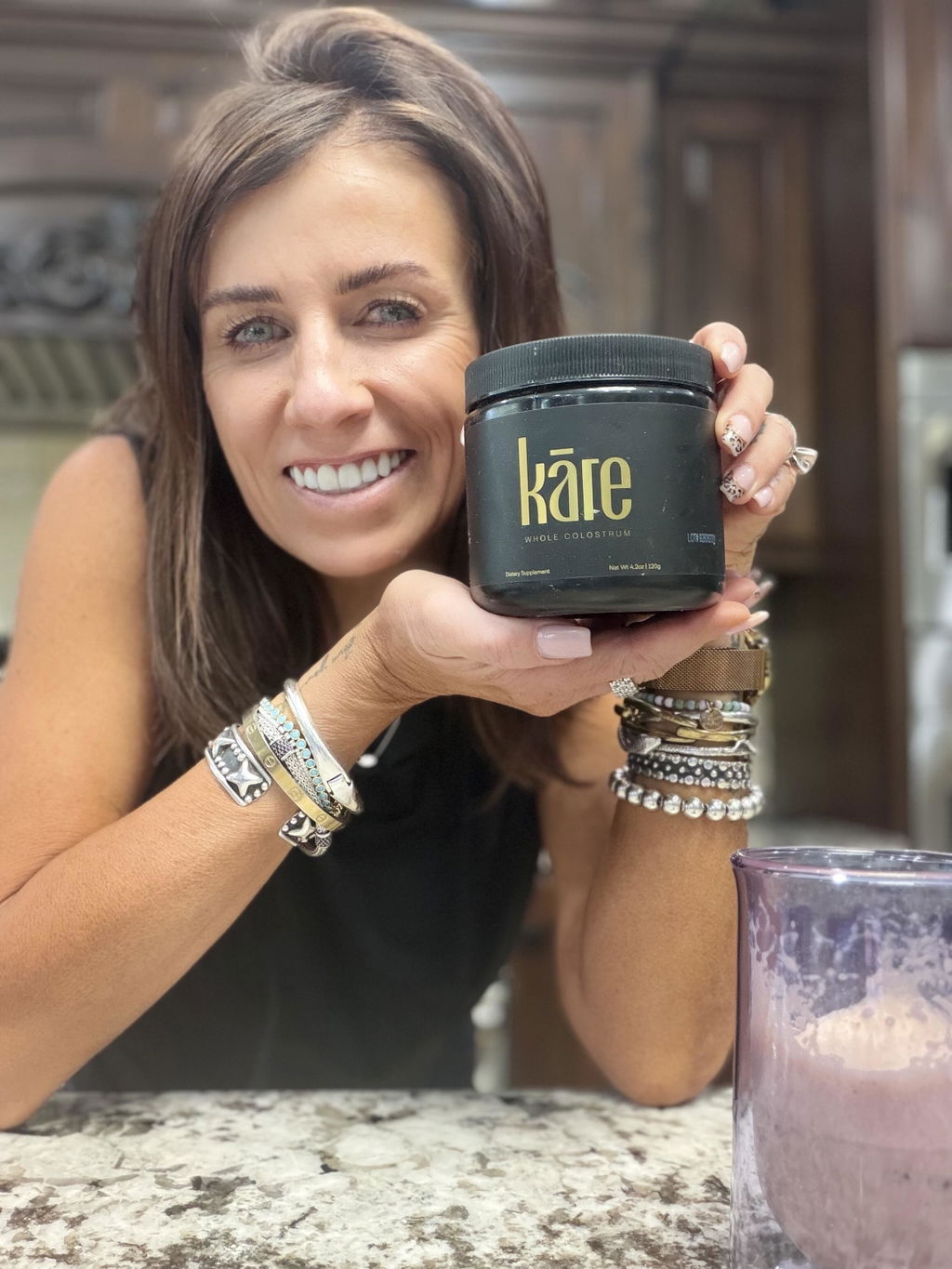
kāre sources from grass-fed, pasture-raised cows on New Zealand's South Island, below the Southern Alps. These cows roam freely outdoors 365 days a year on 95%+ fresh grass—no routine vaccinations, no artificial stressors, no rBST. That matters because a stressed cow produces different colostrum than a content one, and a grass-fed animal's milk composition is measurably richer in immune-supporting compounds.
More importantly: kāre processes colostrum fresh within 48 hours using gentle, low-temperature spray-drying (37-60°C) that preserves bioactive proteins. And here's the quiet confidence part—kāre uses turbidity-corrected IgG testing, which means the number reported is actually what's bioactive, not inflated. A lower accurate number beats a higher one that doesn't work.
Every batch is certified FSSC 22000 and ISO 17025, tested, and traceable. Calves receive their first 4 litres before any collection happens—because ethical sourcing and efficacy go together. Learn more about what IgG actually means and why testing matters, or explore how colostrum supports your overall gut microbiome balance.
If autoimmune-driven gut inflammation has been holding you back, colostrum deserves a serious look. The science is solid, the mechanism is sound, and the quality of your source genuinely determines whether you're taking a supplement or actually supporting healing. Try kāre and give your gut the bioactive support it's been asking for.