How Long Does Colostrum Take to Heal Gut: What the Research Actually Shows
You've got gut trouble. Bloating, inflammation, poor digestion — the usual suspects. Someone mentioned colostrum, and now you're wondering: how long will this actually take to work? Fair question. The honest answer is: it depends on your starting point, but most people notice shifts within 2–4 weeks of consistent use.
The Plain Answer: Timeline and What to Expect
Colostrum doesn't work like a painkiller. You won't wake up tomorrow with a healed gut. But research suggests that bioactive colostrum can begin supporting your digestive lining within days, with more meaningful improvements showing up over 4–12 weeks.
Here's the realistic breakdown:
- Days 1–7: Your gut is receiving immune factors (IgG antibodies and lactoferrin, which are proteins that support healthy immune response in the digestive tract). You might feel calmer digestion, less bloating.
- Weeks 2–4: The growth factors in colostrum — particularly IGF-1 (insulin-like growth factor 1, a compound that supports cell repair) — begin stimulating the repair of your intestinal lining.
- Weeks 4–12: More significant restoration. Your gut barrier function improves, inflammation typically decreases, and nutrient absorption gets better.
The timeline accelerates if your gut damage is mild (minor inflammation, dysbiosis) versus severe (leaky gut, IBD). Starting dose and consistency matter too. Missing doses resets progress.
How Colostrum Actually Repairs Your Gut: The Science Layer
Colostrum contains four main players in gut healing:
IgG antibodies: These are immune proteins that recognise harmful pathogens and neutralise them before they damage your intestinal wall. They essentially act as bouncers, keeping trouble out.
Lactoferrin: An iron-binding protein that starves bad bacteria while feeding beneficial ones. It's a selective antimicrobial — it knows the difference between friend and foe.
IGF-1 (insulin-like growth factor 1): This compound directly stimulates the regeneration of intestinal cells. Research has shown it accelerates the healing of the gut lining, particularly in cases of exercise-induced or inflammatory damage.
Proline-rich polypeptides (PRPs): Small proteins that help regulate immune response, preventing both under- and over-reactivity in your gut.
Together, they reduce inflammation, strengthen the intestinal barrier, and restore microbial balance. The key is bioactivity — these compounds only work if they survive processing intact. Many commercial colostrum products use harsh heat that damages these delicate proteins, which is why reported IgG numbers from some brands are artificially inflated.
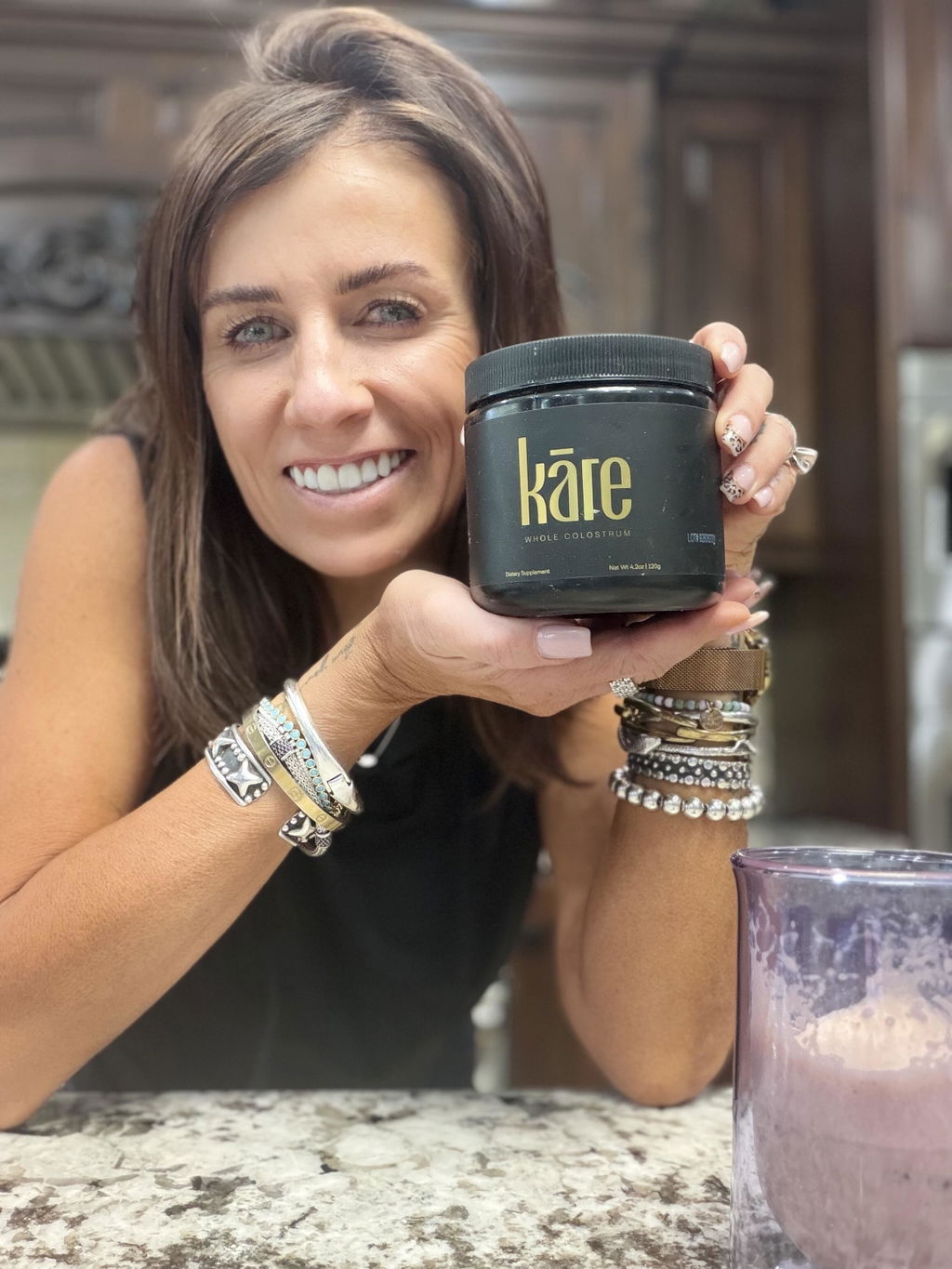
Why kāre's Colostrum Heals Faster: Bioactive Integrity Matters
Not all colostrum is equal. The source, processing method, and testing transparency determine whether you're actually getting healing compounds or just an expensive placebo.
kāre sources from grass-fed, pasture-raised cows on New Zealand's South Island, below the Southern Alps. These cows roam freely outdoors 365 days a year on 95%+ fresh grass — no routine vaccination, no artificial stress. That matters. Stressed, confined animals produce colostrum with lower bioactive density.
More importantly: kāre processes colostrum fresh within 48 hours of collection using low-temperature spray-drying (37–60°C). Never frozen. This gentle approach preserves the IgG, lactoferrin, and growth factors that actually do the healing work.
And here's the transparency part: kāre reports IgG numbers using turbidity-corrected testing, meaning the IgG we claim is actually bioactive. Some brands report inflated numbers from harsh processing that denatures proteins. A lower accurate number beats a higher fake one — because you're only getting the compounds that actually work.
This is why kāre users often see faster, more reliable results. You're getting colostrum designed to heal, not marketing designed to impress.
Ready to support your gut? Start with kāre colostrum and give it 4 weeks of consistent daily use. Your gut's been waiting.
Learn more about how colostrum supports your gut microbiome and why IgG transparency matters for real results.