EGF in Colostrum for Skin Benefits: What the Research Shows
If you've stumbled across "EGF" while researching colostrum for skin, you're looking at one of nature's most underrated skin allies. EGF—short for epidermal growth factor—is a protein that tells your skin cells to renew themselves. Colostrum is loaded with it. And if you're tired of expensive serums that overpromise, this might be the unglamorous solution your skin actually needs.
What Is EGF and Why Your Skin Cares
Let's start with plain English: EGF is a growth factor (a signaling molecule that tells cells what to do) that lives naturally in your skin. It essentially whispers to your skin cells: "time to divide, repair, and look fresher." When EGF levels drop—which they do as we age—your skin's natural renewal process slows down. Fine lines deepen. Elasticity fades. Healing takes longer.
Colostrum, the nutrient-dense first milk produced by mammals after birth, contains significant amounts of EGF. Research suggests that when you consume colostrum with intact EGF, you're giving your body raw material to support skin regeneration from the inside out. It's not magic. It's biology.
Studies have shown that EGF may support skin barrier function, hydration, and the production of collagen—the protein that keeps skin plump and firm. Some research indicates that bioavailable EGF from colostrum may reach systemic circulation and influence skin health, though this remains an active area of study.
The Mechanism: How EGF Gets to Work
Here's where processing matters enormously. EGF is a fragile protein. High heat—the kind some brands use to quickly dry colostrum—denatures it. That means it breaks down and loses its function. It's still present in the powder, but it can't do much.
When you ingest colostrum with *bioactive* EGF, it interacts with EGF receptors in your gut lining. Your body recognizes it, absorbs it (or its amino acid building blocks), and your skin cells respond. Research on bovine colostrum shows that these growth factors are not destroyed by stomach acid to the extent we once thought—some peptides survive and reach the bloodstream intact.
The result: skin that appears more resilient, firms up more readily, and heals faster. Some users report visible improvements in fine lines and skin texture within 4–8 weeks. That's not hype. That's realistic collagen turnover timelines.
There's also a secondary mechanism: EGF supports colostrum's role in gut barrier function, which indirectly supports skin health. Healthy gut = less systemic inflammation = clearer, calmer skin. It's connected.
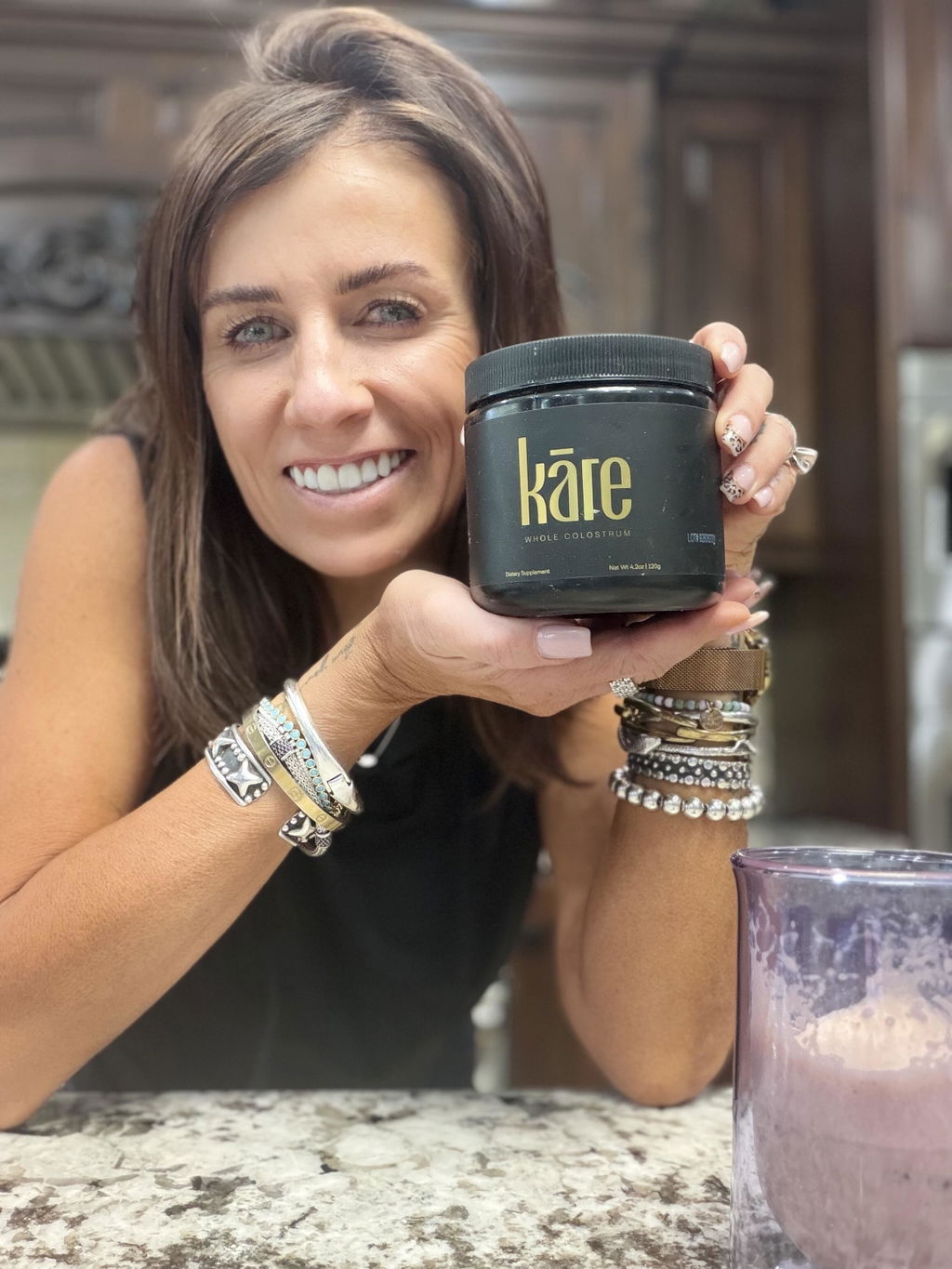
Why kāre's EGF Actually Works: The Sourcing and Testing Story
Not all colostrum powders are created equal. Most brands won't tell you this, but some inflate their reported EGF and growth factor numbers using testing methods that count denatured proteins alongside bioactive ones. You end up with impressive numbers on a label and mediocre results in the mirror.
kāre sources colostrum from grass-fed cows on New Zealand's South Island—animals that roam freely 365 days a year and eat 95%+ fresh grass. Stress, artificial hormones, and routine vaccinations degrade colostrum quality. Our cows avoid all three. The result: naturally higher EGF content from the source.
Then we process it gently. Our low-temperature spray-drying (37–60°C) preserves EGF and other growth factors. We use turbidity-corrected testing to measure only *bioactive* proteins—the ones that actually work. A lower, honest number beats inflated fiction every time.
Plus: kāre reports IgG levels transparently, so you know exactly what's in your powder. You deserve honesty about what goes in your body.
Skin, Aging, and the Bigger Picture
EGF is one part of a much larger anti-aging story. If you're serious about skin elasticity and collagen support, colostrum's full spectrum of bioactive compounds matters: immunoglobulins, lactoferrin, proline-rich polypeptides. EGF is the headline, but the ensemble cast steals the show.
That said, if your skin is showing age, losing firmness, or struggling to heal—EGF-rich colostrum is worth trying. The science is quiet but solid. The results are subtle but real.
Ready to see what properly sourced, properly processed colostrum does for your skin? Try kāre and give it 4–6 weeks. Your skin will tell you if it's working.