Colostrum vs Collagen Powder: Which Supplement Actually Works for You?
You've probably noticed both colostrum and collagen powder sitting on supplement shelves, both promising glowing skin, stronger joints, and better gut health. The messaging is similar enough to be confusing. But here's the thing: they're doing completely different jobs in your body, and understanding that difference is what actually matters when you're deciding which one deserves a spot in your routine.
The Plain Language Difference: What Each One Does
Collagen is a structural protein—think of it as the scaffolding that holds your skin, joints, and connective tissue together. Collagen powder contains broken-down collagen peptides (short chains of amino acids), which your body can theoretically use to support its own collagen production. It's like handing your body some building blocks and hoping it uses them where you want.
Colostrum, on the other hand, is the nutrient-dense first milk produced by cows in the 48 hours after birth. It's not primarily about structure; it's about communication and defense. Colostrum contains immunoglobulins (antibodies like IgG), growth factors, and bioactive compounds that may support immune function, gut health, and recovery. Your gut lining is where roughly 70% of your immune system lives, and colostrum is specifically designed to support that barrier.
Different tools for different jobs.
How Each One Works: The Research Layer
Collagen research is straightforward: studies show that collagen peptides can increase skin hydration and reduce the appearance of fine lines when taken consistently over 8–12 weeks. The mechanism is partly direct (providing amino acids like glycine and proline) and partly indirect (these amino acids trigger your body's natural collagen synthesis). For joint support, the data is similarly encouraging, especially for athletes dealing with wear and tear.
Colostrum operates through a more complex pathway. The IgG (immunoglobulin G)—the key antibody in colostrum—may support your gut's ability to maintain a healthy barrier and balance its microbial ecosystem. Research suggests this can have ripple effects: better nutrient absorption, more stable energy, and improved recovery from physical stress. Some studies point to benefits for immune system resilience and gut microbiome diversity, though more human research is always welcome.
The key insight: collagen rebuilds structure; colostrum supports the systems that maintain health from the foundation up.
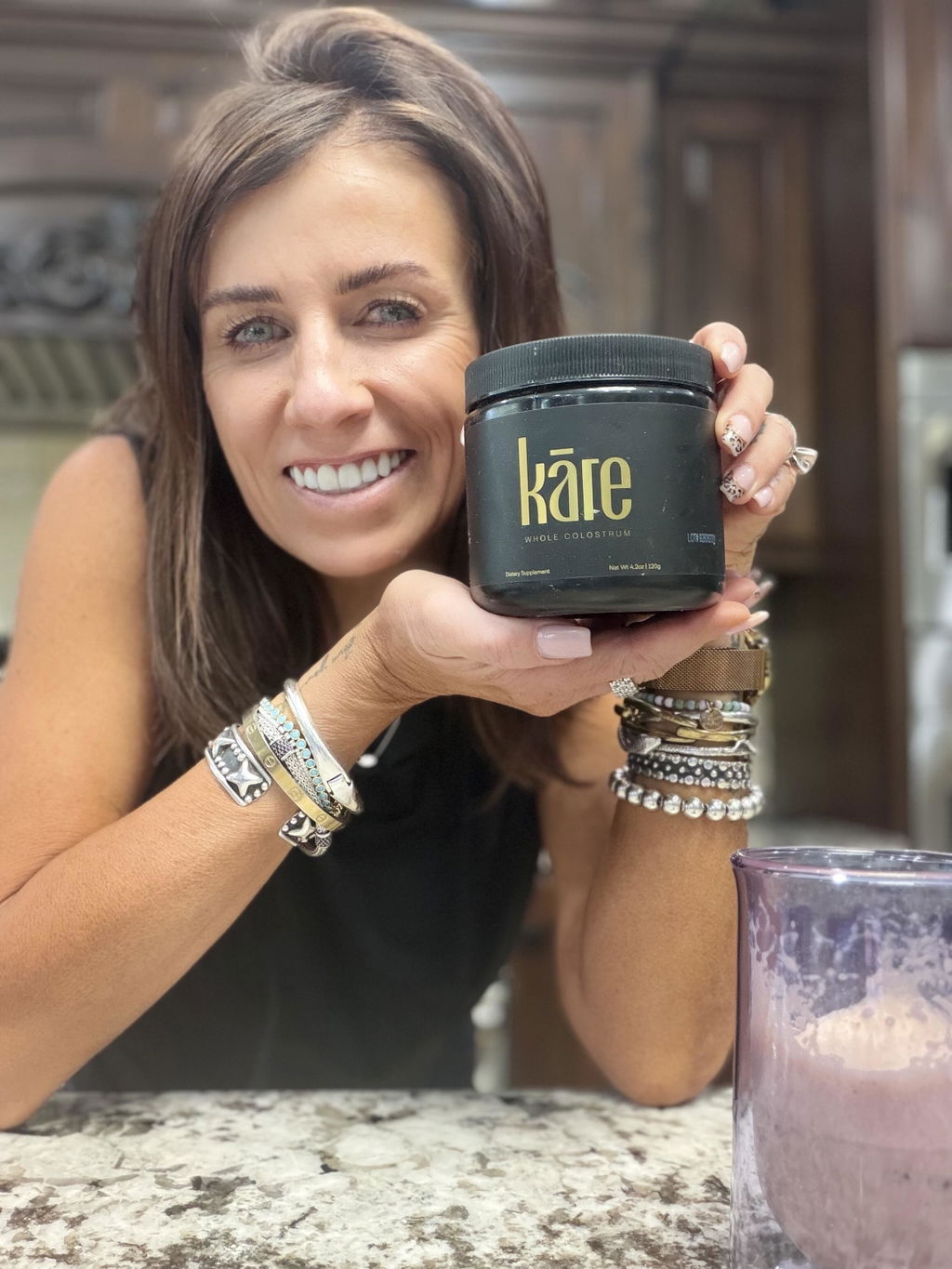
Why kāre's Colostrum Stands Apart
If you're leaning toward colostrum, sourcing matters far more than most people realize. Not all colostrum is created equal, and a huge problem in the industry is inflated IgG numbers.
Here's what happens with some brands: harsh, high-temperature processing damages the very proteins they're measuring. Their reported IgG looks impressive on paper, but it's not actually bioactive in your body—it's essentially damaged goods. They're using standard turbidity testing, which counts broken proteins the same as intact ones.
kāre uses turbidity-corrected testing. We report what's actually usable. Our IgG number may be lower than some competitors' claims, but it's real. That's the quiet confidence part—we'd rather give you an accurate, lower number than an inflated one.
Beyond testing transparency, our sourcing is deliberate: grass-fed, pasture-raised cows on New Zealand's South Island, roaming freely outdoors 365 days a year on 95%+ fresh grass. The cows are never routinely vaccinated or artificially stressed. We process fresh (never frozen) within 48 hours of collection using gentle, low-temperature spray-drying (37–60°C) that preserves bioactivity. Every calf receives their first 4 litres before we collect anything—always ethical, always sustainable.
The result: colostrum that actually does what colostrum is supposed to do.
So, Which One Should You Choose?
Pick collagen if your primary goal is skin appearance or joint structure support. Pick colostrum if you want to support your gut foundation, immune resilience, and overall recovery. Better yet? They're not mutually exclusive. Some people use both for different reasons.
If you're choosing colostrum, make sure you're getting the real thing—bioactive IgG, ethical sourcing, and transparent testing. Try kāre and feel the difference that fresh, grass-fed, thoughtfully processed colostrum can make.