Colostrum for Menopause Bloating: How Gut Health Supports Hormonal Balance
Menopause bloating is real, uncomfortable, and often dismissed. That heavy, swollen feeling that seems to camp out in your abdomen doesn't care that it's "normal." If you're searching for solutions beyond waiting it out, you've probably stumbled across colostrum—and you're wondering if it actually helps. The short answer: research suggests it might, especially if your bloating is connected to gut health. Let's dig into why.
What Colostrum Actually Does for Bloating
Colostrum is the nutrient-dense first milk produced by mammals after birth. Think of it as nature's concentrated wellness formula—packed with immune factors, growth compounds, and gut-healing proteins that your body recognizes and knows how to use.
Here's the plain English version: menopause bloating often stems from a combination of hormonal shifts, reduced estrogen, and—critically—changes in your gut. Your gut microbiome (the community of bacteria living in your digestive system) actually depends on estrogen to function optimally. When estrogen drops, your gut bacteria shift, digestion becomes less efficient, and bloating follows.
Colostrum may help by doing two things. First, it contains compounds called immunoglobulins—specifically IgG, the most abundant antibody in your body—that help support your intestinal barrier. A stronger gut lining means less inflammation and potentially less bloating. Second, colostrum contains lactoferrin and growth factors that may encourage the growth of beneficial bacteria, helping restore the microbial balance your menopause hormones have disrupted.
The Science: Hormones, Gut Health, and Inflammation
The connection between menopause and bloating isn't just about water retention. Research shows that declining estrogen affects intestinal permeability (how selectively your gut absorbs nutrients and blocks toxins). When this barrier weakens—a condition sometimes called "leaky gut" (increased intestinal permeability)—your immune system reacts to particles it shouldn't see, triggering inflammation and bloating.
Colostrum's IgG content has been studied for its role in supporting colostrum for gut inflammation. IgG binds to unwanted particles in your digestive tract, preventing them from triggering an immune response. This may reduce the inflammatory cascade that fuels bloating.
Additionally, colostrum contains growth factors like IGF-1 (insulin-like growth factor 1) that research suggests may help rebuild the intestinal lining itself. A more robust gut barrier means your digestive system works harder to keep inflammation down during this hormonally turbulent phase of life.
The relationship between gut health and systemic inflammation is well-established. Supporting colostrum and gut microbiome balance may have cascading benefits beyond digestion—potentially easing bloating at its source rather than just masking symptoms.
Why Quality Colostrum Matters (And Why We're Different)
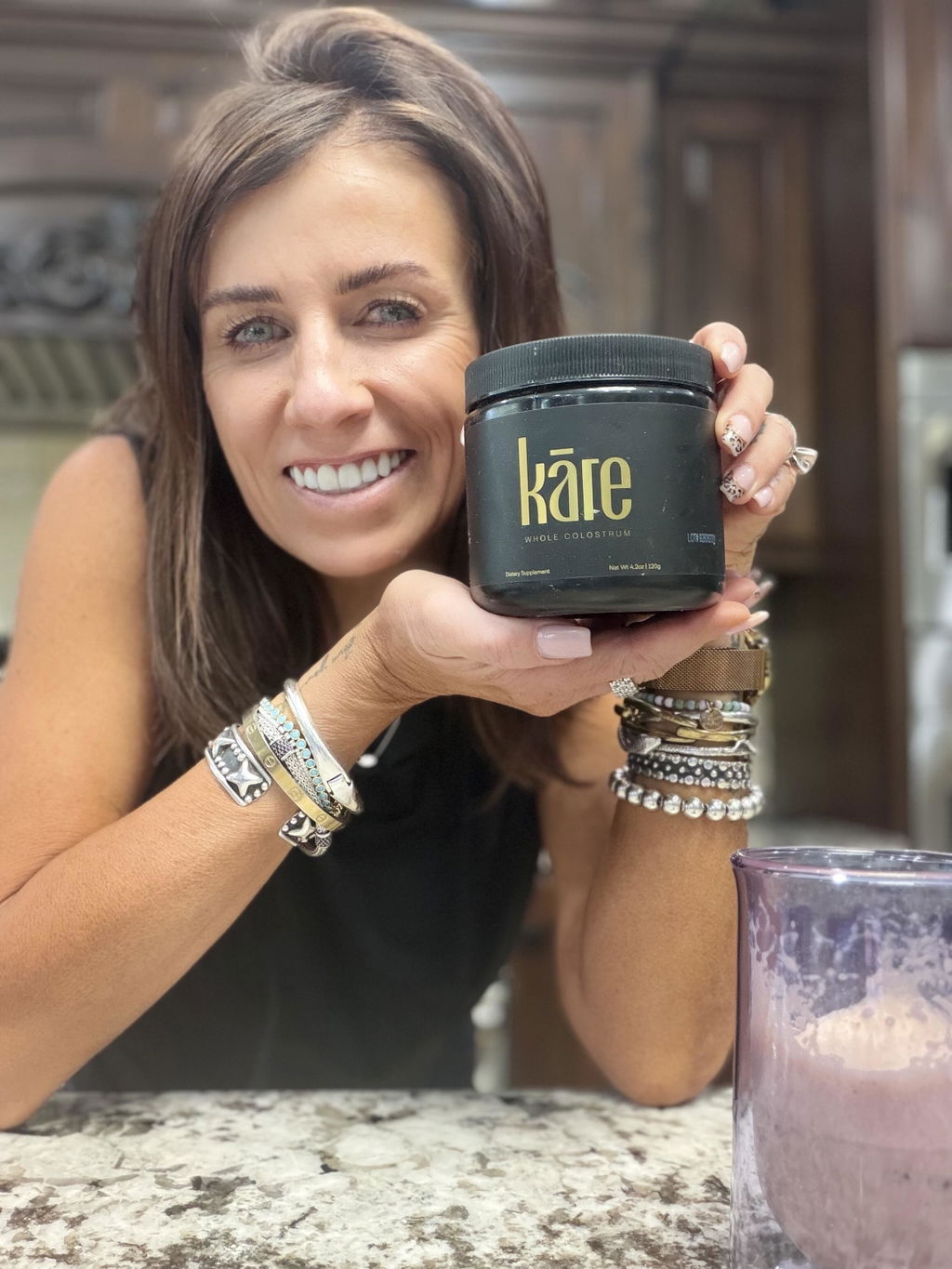
Not all colostrum is created equal. Here's where most brands cut corners and why kāre exists.
Our colostrum comes from grass-fed, pasture-raised cows on New Zealand's South Island, where animals roam outdoors 365 days a year on fresh grass. More importantly, we process it fresh—never frozen—within 48 hours of collection using gentle, low-temperature spray-drying (37-60°C). This matters because harsh processing damages the very proteins you're taking colostrum for.
Here's the transparency piece some brands won't tell you: IgG is often reported inflated because standard testing doesn't account for protein damage. We use turbidity-corrected testing, meaning our IgG numbers are actually bioactive. A lower, honest number beats a higher inflated one—your gut knows the difference.
Our cows are rBST-free, non-GMO, and not routinely vaccinated or artificially stressed. And yes—calves receive their first four litres before we collect anything. Ethics aren't marketing language for us; they're how we operate.
For menopause bloating specifically, you need colostrum that's genuinely intact at the molecular level. That's what kāre delivers.
Menopause bloating doesn't have to be your new normal. By supporting your gut health during this hormonal transition, you're working with your body's physiology rather than against it. Try kāre and feel the difference quality colostrum can make.