Colostrum for Gut Health During Perimenopause: A Natural Support Strategy
If you're navigating perimenopause, you've probably noticed your gut acting differently than it used to. Bloating, unpredictable digestion, and that sense that your body's playing a new game with different rules—these aren't in your head. Hormonal shifts genuinely change your gut environment, and while you can't stop the transition, there's something that might help: colostrum.
Colostrum is the nutrient-dense first milk produced by mammals after birth. It's packed with compounds your gut actually recognizes and responds to—and during perimenopause, when hormonal fluctuations stress your digestive system, that support matters.
Why Your Gut Changes During Perimenopause (And What Colostrum Does About It)
Your estrogen levels don't just affect your mood and hot flushes. They're deeply connected to your gut lining integrity, your bacterial balance, and your digestion speed. As estrogen dips and fluctuates through perimenopause, your gut barrier—the selective fence that decides what gets absorbed and what doesn't—becomes more permeable. This is sometimes called "leaky gut," and it's a legitimate response to hormonal change, not a sign something's broken.
Colostrum works here because it contains immunoglobulins (particularly IgG, the antibody that travels throughout your system) and growth factors that actively support your gut barrier function. Research suggests these compounds may help seal tight junctions in your intestinal lining, reducing unwanted permeability and the inflammation that often follows.
Beyond the barrier itself, colostrum supports a balanced microbiome—the trillions of bacteria living in your gut. A healthy microbiome actually produces its own estrogen-like compounds, which can help buffer some of perimenopause's intensity. It's not a fix, but it's real support from a biological level.
The Science: How Colostrum Supports Digestive Resilience
Colostrum contains several bioactive proteins that research has linked to gut health. Lactoferrin, for example, is an iron-binding protein with demonstrated antimicrobial and anti-inflammatory properties. Immunoglobulins (antibodies) coat your gut lining and help your immune system recognize what belongs and what doesn't—crucial during hormonal transition when immune sensitivity often shifts.
There's also a growth factor called IGF-1, which has been shown to support cell repair in the intestinal lining. During perimenopause, when your gut lining is more vulnerable, this repair capacity becomes valuable.
The research on colostrum and gut microbiome balance suggests it may preferentially support beneficial bacteria while limiting overgrowth of less helpful species. A more stable microbiome means better nutrient absorption, fewer digestive complaints, and less inflammation—all things perimenopause tries to disrupt.
Why Fresh, Transparent Colostrum Matters More Than You'd Think
Not all colostrum does the same thing. The difference is in the processing and honesty.
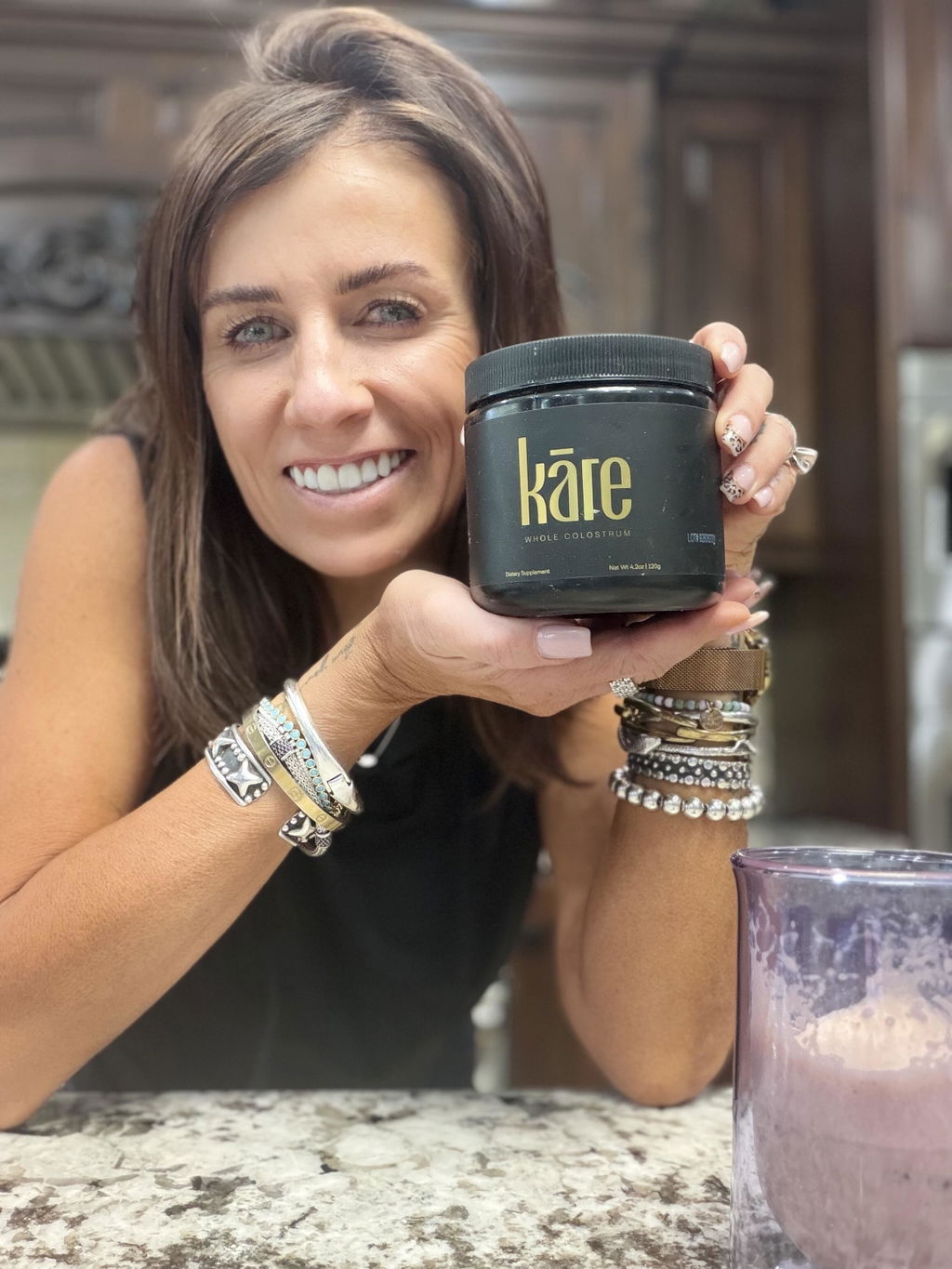
Most colostrum is frozen, then thawed multiple times during processing. That damages the very proteins you're taking it for. kāre uses a different approach: we process colostrum fresh within 48 hours of collection using gentle, low-temperature spray-drying. This preserves the bioactive structure of the immunoglobulins and growth factors that support your gut.
We're also transparent about IgG levels in a way many brands aren't. IgG is the key antibody, and some competitors report inflated numbers because harsh processing damages proteins but doesn't remove them—so they still show up in standard tests. We use turbidity-corrected testing, which means our reported IgG is actually bioactive. A lower accurate number beats a higher inflated number every time.
Our colostrum comes from grass-fed, pasture-raised cows on the South Island of New Zealand, roaming outdoors 365 days a year. These cows aren't routinely vaccinated or artificially stressed, which means the colostrum carries a natural, diverse immune signature. That diversity is exactly what your transitioning gut benefits from.
Explore more about what IgG actually is and why bioactive IgG matters.
Moving Forward with Confidence
Perimenopause is a season of change, and your gut is right there in the middle of it. Colostrum won't erase the transition, but it may provide real, science-backed support exactly where you need it: your gut barrier, your microbiome, and your digestive resilience. Start with kāre colostrum and notice what shifts for you over 4–8 weeks.